
Unlocking CPU Power: Physics, Cycles, and Efficiency in Bihar's Tech Future
Explore the intricate world of CPU physics and clock cycles. Understand how efficient programming optimizes performance, crucial for Bihar's growing tech landscape and digital transformation.
 DailyForge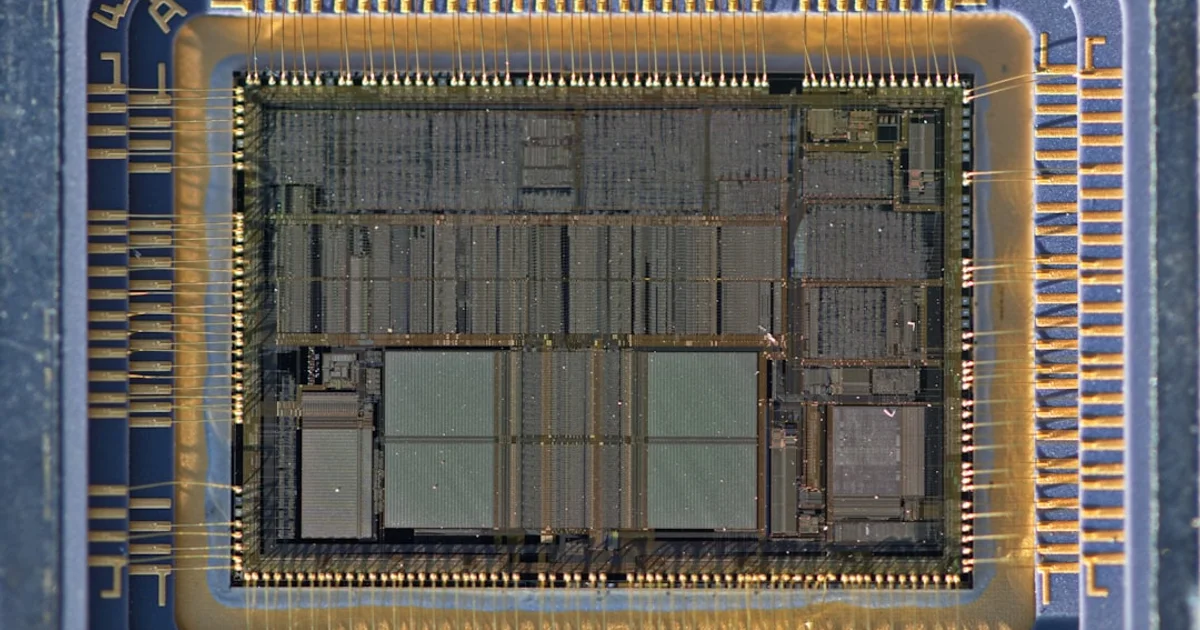
- 1At its heart, a CPU is a complex arrangement of transistors etched onto a silicon substrate.
- 2Every operation within a CPU is synchronized by a precise internal clock, measured in gigahertz (GHz).
- 3Given the physical and cyclical realities of CPUs, the imperative for efficient software programming becomes evident.
- 4Bihar is undergoing a significant digital transformation, with initiatives aimed at improving e-governance platforms, digital literacy, and fostering a local tech ecosystem.
The central processing unit (CPU) stands as the bedrock of modern computing, a marvel of engineering that drives everything from our smartphones to the most complex supercomputers. Yet, beneath its seemingly abstract operations lies a deep interplay of fundamental physics and meticulously orchestrated electrical cycles. Understanding these core principles isn't merely an academic exercise; it's a critical necessity for anyone striving to build efficient, robust, and high-performing software, especially in rapidly developing regions like Bihar.
This exploration delves into the microscopic world of CPU physics, the rhythmic pulse of CPU cycles, and the profound implications for software efficiency. As the digital landscape in Bihar expands, with increasing demand for sophisticated applications in e-governance, education, and industry, the insights gained from understanding CPU mechanics become invaluable. Developers and technologists in the region, much like those globally, face the challenge of maximizing performance within the constraints of available hardware, making every CPU cycle count.
The Invisible Dance of Electrons: CPU Physics Fundamentals
At its heart, a CPU is a complex arrangement of transistors etched onto a silicon substrate. The speed and efficiency of a CPU are fundamentally governed by the laws of physics that dictate how electrons move through these tiny pathways. Factors like heat dissipation, electrical resistance, and the quantum effects at nanoscale become paramount. As transistors shrink, packing billions into a single chip, the challenges of electron migration and signal integrity intensify, pushing the boundaries of what semiconductor physics allows.
These physical limitations directly influence architectural design choices, from the layout of cache memories to the number of processing cores. The constant pursuit of higher clock speeds and greater transistor density often collides with the realities of power consumption and thermal management. Engineers must ingeniously design around these physical hurdles, creating microarchitectures that can perform complex computations with minimal wasted energy and maximum stability. This delicate balance between physical constraints and computational ambition defines the evolutionary path of every new CPU generation.
📌 Key Point: The physical properties of silicon, including heat dissipation and electron movement, are the ultimate limiting factors for CPU performance and design.
Decoding CPU Cycles: The Heartbeat of Computation
Every operation within a CPU is synchronized by a precise internal clock, measured in gigahertz (GHz). A CPU cycle, or clock cycle, represents the smallest unit of time during which a CPU can perform an operation. A 3 GHz CPU, for instance, executes 3 billion cycles per second. However, clock speed alone is not a definitive measure of performance. The true metric lies in how much work the CPU accomplishes per cycle, a concept known as Instructions Per Cycle (IPC).
Modern CPUs employ sophisticated techniques like pipelining, out-of-order execution, and branch prediction to execute multiple instructions within a single clock cycle or to keep pipelines full, maximizing IPC. A CPU with a lower clock speed but higher IPC can often outperform a CPU with a higher clock speed but lower IPC. Understanding this distinction is crucial for optimizing software, as it shifts the focus from merely chasing raw clock speed to ensuring that the CPU is utilized as efficiently as possible during each cycle.
Factors that affect overall CPU performance include:
- Clock speed (frequency of cycles)
- Instructions Per Cycle (IPC)
- Number of cores
- Cache size and hierarchy
- Memory bandwidth and latency
Bridging Hardware and Software: The Efficiency Imperative
Given the physical and cyclical realities of CPUs, the imperative for efficient software programming becomes evident. Inefficient code, characterized by redundant computations, poor memory access patterns, or suboptimal algorithms, directly translates to wasted CPU cycles. This waste not only slows down applications but also increases power consumption and resource strain, a significant concern for organizations and individuals in Bihar relying on reliable and sustainable digital infrastructure.
As Alex Stepanov, author of the original STL, eloquently put it: > "Another benefit of striving for efficiency is that the process forces you to understand the problem in more depth." This profound insight highlights that the pursuit of algorithmic efficiency and optimized data structures isn't just about speed; it's about a deeper comprehension of the underlying problem and the computational resources required to solve it. For developers, especially those working with languages like C++ – the focus of Sherry Ignatchenko and Dmytro Ivanchykhin's upcoming book "Efficient C++ Programming for Modern 64-bit CPUs" – understanding how their code interacts with the CPU's architecture is paramount.
The Bihar Context: Optimizing for Local Challenges and Opportunities
Bihar is undergoing a significant digital transformation, with initiatives aimed at improving e-governance platforms, digital literacy, and fostering a local tech ecosystem. In this dynamic environment, where access to cutting-edge hardware may not always be universal, optimizing software for maximum CPU efficiency takes on added importance. Efficient applications require less powerful hardware to run smoothly, making technology more accessible and cost-effective for a broader population.
Consider applications in agricultural technology, a vital sector in Bihar. An inefficient application designed to process crop data or manage supply chains could lead to slower decision-making, higher operational costs due to increased server load, or even necessitate expensive hardware upgrades. Conversely, an application built with CPU performance optimization in mind can deliver faster results on existing infrastructure, extending its lifespan and reducing the total cost of ownership. This focus on efficiency supports sustainable technological growth, aligning with the broader goals of Digital India and empowering local innovation.
For Bihar's burgeoning tech sector, efficient CPU usage isn't just a technical detail; it's a strategic advantage that democratizes technology and fosters sustainable digital growth.
Strategies for Maximizing CPU Efficiency in Modern Systems
Achieving peak CPU efficiency involves a multi-faceted approach, spanning from fundamental programming practices to advanced architectural considerations. One critical area is cache optimization. CPUs employ multiple levels of cache memory (L1, L2, L3) that are significantly faster than main RAM. Writing code that exhibits good data locality – accessing data that is physically close in memory – ensures that the CPU spends less time waiting for data to be fetched, dramatically improving performance.
Another key strategy is parallel computing. Modern CPUs feature multiple cores, and leveraging these cores through multi-threading or parallel processing allows a program to execute several tasks simultaneously, drastically reducing overall execution time for suitable workloads. Effective memory access patterns and judicious use of CPU-specific instructions (e.g., SIMD instructions) can also yield substantial gains. The principles outlined in works like "Efficient C++ Programming for Modern 64-bit CPUs" offer detailed guidance on how to harness these advanced techniques, ensuring that software fully exploits the capabilities of 64-bit CPU architectures.
Optimization strategies include:
- Cache-aware programming: Designing algorithms to minimize cache misses.
- Parallelization: Utilizing multi-core processors effectively.
- Algorithmic choice: Selecting algorithms with optimal time and space complexity.
- Compiler optimizations: Understanding and leveraging compiler flags.
- Memory management: Efficient allocation and deallocation of resources.
📌 Key Point: While optimization is crucial, premature optimization can lead to complex, harder-to-maintain code with minimal real-world benefits. Profile first, then optimize bottlenecks.
Key Statistics
- A modern high-performance CPU can contain over 40 billion transistors.
- India's digital economy is projected to reach $1 trillion by 2025, underscoring the need for efficient software and infrastructure.
- The average CPU clock speed has plateaued around 3-5 GHz for consumer chips, indicating that performance gains are now primarily driven by IPC improvements and core counts.
- 85% of programmers believe that understanding hardware architecture is beneficial for writing efficient code.
- Bihar's IT exports have seen a steady rise, with significant growth in software development and IT-enabled services, highlighting the increasing demand for skilled developers who can optimize performance.
Conclusion
The intricate dance between CPU physics and clock cycles forms the very foundation upon which our digital world is built. From the physical limitations of silicon and heat to the rhythmic precision of billions of operations per second, understanding these core principles empowers developers to craft software that not only functions but excels. The pursuit of efficiency, as highlighted by experts like Alex Stepanov, is a journey towards deeper problem comprehension and superior engineering.
For Bihar, a state rapidly embracing technological advancement, the mastery of CPU physics and efficient programming is more than a technical skill; it's an enabler of progress. By focusing on optimizing every CPU cycle, developers and organizations can build more accessible, sustainable, and powerful applications that drive innovation, bridge digital divides, and contribute significantly to the state's economic and social development, ensuring a robust digital future.
FAQ
QWhat is a CPU cycle? A: A CPU cycle, or clock cycle, is the smallest unit of time during which a CPU can perform an operation, synchronized by an internal clock typically measured in gigahertz (GHz).
QHow does CPU physics affect performance? A: CPU physics dictates fundamental limitations like heat dissipation, electron speed, and transistor density. These physical constraints directly influence how fast and efficiently a CPU can operate, impacting its design and ultimate performance.
QWhy is efficient programming important for Bihar? A: Efficient programming is crucial for Bihar because it allows applications to run effectively on diverse hardware, reduces energy consumption, lowers operational costs for digital services, and makes technology more accessible and sustainable for the region's growing digital infrastructure.
QWhat is IPC in the context of CPUs? A: IPC stands for Instructions Per Cycle. It measures how many instructions a CPU can execute within a single clock cycle. A higher IPC generally indicates more efficient CPU utilization and better overall performance, regardless of raw clock speed.
Rate this article
Discussion
Leave a comment
Keep reading
Latest from DailyForge

Skoda's Upcoming Premium EV: A Game Changer for India's Luxury Segment?
Skoda is preparing to launch its most expensive electric vehicle yet, the Peaq. This bold move into the premium EV segment could redefine its presence in India's rapidly evolving luxury car market. Will it succeed?
DailyForge · 4 min readRead 
AI Technology Trends 2026: The Future of Intelligence Unveiled
4 min read
US-Iran Deal Imminent? Pakistan PM Signals Breakthrough Within Hours
4 min read
BJP's Maharashtra Surge: Sena, NCP on Edge as Power Dynamics Shift
4 min read
Pranit More's Biryani Apology: The Viral Video That Stirred India's Food Debate
4 min read
Ahmedabad Air India Incident: A Year Later, Recalling Safety Reforms
4 min readEnjoy this article?
Get fresh stories delivered to your inbox every morning.