OpenAI vs. Anthropic: Who's Leading the AI Innovation Race?
The AI world is captivated by the intense rivalry between OpenAI and Anthropic. Delve into their core philosophies, compare their cutting-edge models like GPT-4o and Claude 3, and explore their distinct approaches to AI safety and market strategies.
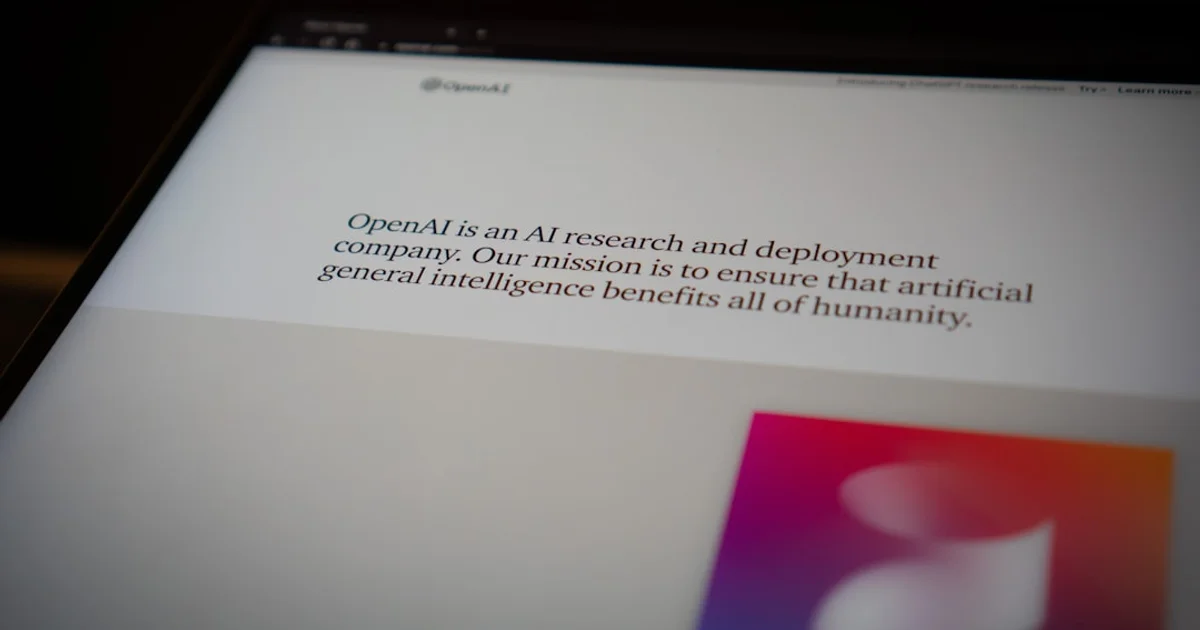
- 1OpenAI, co-founded by Sam Altman, Elon Musk, and others, initially launched as a non-profit with a mission to ensure artificial general intelligence (AGI) benefits all of humanity.
- 2OpenAI is renowned for its GPT series, including the groundbreaking GPT-3, the highly capable GPT-4, and the recently launched multimodal GPT-4o.
- 3Anthropic's "Constitutional AI" is a defining feature.
The world of artificial intelligence is currently witnessing an exhilarating contest between two of its most prominent players: OpenAI and Anthropic. Both companies are at the forefront of developing powerful large language models (LLMs) and shaping the future of generative AI, but they approach this monumental task with distinct philosophies and strategies.
This isn't just a technological arms race; it's a battle of ideologies concerning AI safety, ethics, and deployment. As their models become increasingly sophisticated, the question of "who's winning" isn't straightforward. It requires a nuanced look at their foundational principles, product capabilities, and impact on the broader AI ecosystem.
Foundational Philosophies and Origins
OpenAI, co-founded by Sam Altman, Elon Musk, and others, initially launched as a non-profit with a mission to ensure artificial general intelligence (AGI) benefits all of humanity. While its structure evolved into a capped-profit entity to attract necessary funding and talent, its stated commitment to safe and beneficial AI remains a core tenet, albeit with a more aggressive push towards deployment and commercialization.
Anthropic, on the other hand, was founded by former OpenAI researchers, including siblings Dario and Daniela Amodei, who left due to disagreements over OpenAI's direction, particularly regarding safety and commercialization speed. Anthropic explicitly prioritizes safety and alignment from the ground up, embedding a "Constitutional AI" approach into its models, which aims to make them harmless, helpful, and honest by design.
Flagship Models and Capabilities
OpenAI is renowned for its GPT series, including the groundbreaking GPT-3, the highly capable GPT-4, and the recently launched multimodal GPT-4o. These models have set benchmarks for natural language understanding, generation, coding, and increasingly, multimodal interactions, allowing for processing of text, audio, and images. ChatGPT, its conversational AI product, has achieved unprecedented user adoption, solidifying OpenAI's consumer presence.
Anthropic's flagship models are the Claude series. Claude 2 gained significant traction for its longer context windows and robust reasoning. The more recent Claude 3 family (Haiku, Sonnet, Opus) directly competes with GPT-4, particularly Opus, which boasts advanced reasoning, complex task execution, and near-human comprehension. Anthropic models are often praised for their reduced tendency to generate harmful or biased content due to their constitutional training methods.
Safety, Ethics, and Responsible AI Development
Anthropic's "Constitutional AI" is a defining feature. It involves training models to adhere to a set of principles derived from documents like the UN Declaration of Human Rights, without human feedback directly labeling every safe or unsafe response. This aims to create models that self-regulate against harmful outputs, making safety an intrinsic part of their architecture. This approach has garnered significant attention for its potential to scale ethical AI development.
OpenAI also invests heavily in AI safety, with dedicated teams focused on alignment, interpretability, and superalignment – an ambitious project to control and align future superintelligent AI. They employ extensive red-teaming, human feedback reinforcement learning (RLHF), and safety guardrails. While both companies are committed to responsible AI, Anthropic's public emphasis on baked-in safety principles often positions it as the more cautious and ethically-driven developer in the public eye.
Market Adoption and Strategic Partnerships
OpenAI has achieved immense market penetration, largely due to its strategic partnership with Microsoft, which has invested billions and integrated OpenAI's models across its product suite, from Azure AI services to Copilot. This has given OpenAI a significant advantage in enterprise adoption and scaling its infrastructure. ChatGPT's viral success also established a strong direct-to-consumer brand.
Anthropic has secured major partnerships as well, most notably with Amazon, which invested up to $4 billion and integrated Claude into its Amazon Bedrock service, offering enterprise customers access to Anthropic's models. Google Cloud is another key partner, making Claude available on its Vertex AI platform. These alliances are crucial for Anthropic to compete with OpenAI's massive reach and secure the necessary compute resources for continued innovation.
Conclusion
Determining a definitive "winner" between OpenAI and Anthropic is complex and depends on the criteria. OpenAI currently leads in broad market adoption and consumer recognition, pushing the boundaries of multimodal AI and rapid deployment. Anthropic, however, is a formidable competitor, particularly in its rigorous approach to AI safety and its compelling Claude 3 models, which demonstrate remarkable reasoning and adherence to ethical guidelines. Both companies are driving the field forward, fostering innovation, and raising critical questions about the future of artificial intelligence, ultimately benefiting the entire ecosystem.
FAQ
QWhat is the main difference in their approach to AI safety? A: Anthropic uses "Constitutional AI," training models to self-regulate based on principles, minimizing direct human supervision for safety. OpenAI uses methods like RLHF, red-teaming, and dedicated alignment teams to build in safety guardrails and research superalignment.
QWhich company has more powerful AI models? A: Both companies have highly powerful models. OpenAI's GPT-4 and GPT-4o are industry leaders in versatility and multimodal capabilities. Anthropic's Claude 3 Opus is a strong contender, often praised for its complex reasoning and safety, frequently matching or exceeding GPT-4 on various benchmarks.
QHow do their business models compare? A: OpenAI operates as a capped-profit entity with significant investment from Microsoft, focusing on broad commercialization through APIs, enterprise solutions, and consumer products like ChatGPT Plus. Anthropic is a public benefit corporation with a long-term profit motive, backed by Amazon and Google, primarily targeting enterprise customers through cloud partnerships and API access, with a strong emphasis on responsible deployment.
Rate this article
Discussion
Leave a comment
Related topics
You might also like
Handpicked stories for you
AI Technology Trends 2026: The Future of Intelligence Unveiled
Artificial intelligence continues its relentless march forward, promising transformative shifts. What will define AI in 2026? Discover the cutting-edge trends set to revolutionize our world.
 DailyForge · 4 min readRead

Enjoy this article?
Get fresh stories delivered to your inbox every morning.